
Key steps to incorporate in your content creation workflow

If your content creation workflow feels chaotic or isn’t bringing the results you want, the process might be the issue. Without a clear structure, even strong ideas can stall, lose focus or fail to perform.
Over half of B2B marketers say it’s challenging to create content that leads to a desired action, and a lack of process is often a major contributor. When teams don’t have a defined system, content is harder to plan, execute and improve over time.
Below, we’ll explore the key steps to incorporate into your content creation process so your team can work more efficiently, maintain quality at scale and create content that supports your goals. This is the same approach we use at Scribe National when helping B2B companies refine content workflows and execution.
What is a content creation workflow?
A content creation workflow is the process you follow to plan, produce, review and publish marketing content. It outlines each stage of content development, from early research and ideation to final edits and distribution.
A workflow also defines who’s responsible for what and when. Writers, editors, designers, subject matter experts and marketers all play a role. A documented workflow helps everyone understand their responsibilities, timelines and feedback checkpoints, which reduces confusion and keeps projects moving.
Well-built content creation workflows don’t need to be rigid, though. They should provide guidance and consistency while still allowing flexibility as priorities, ideas or market conditions change.
What steps should you always incorporate into your content creation?
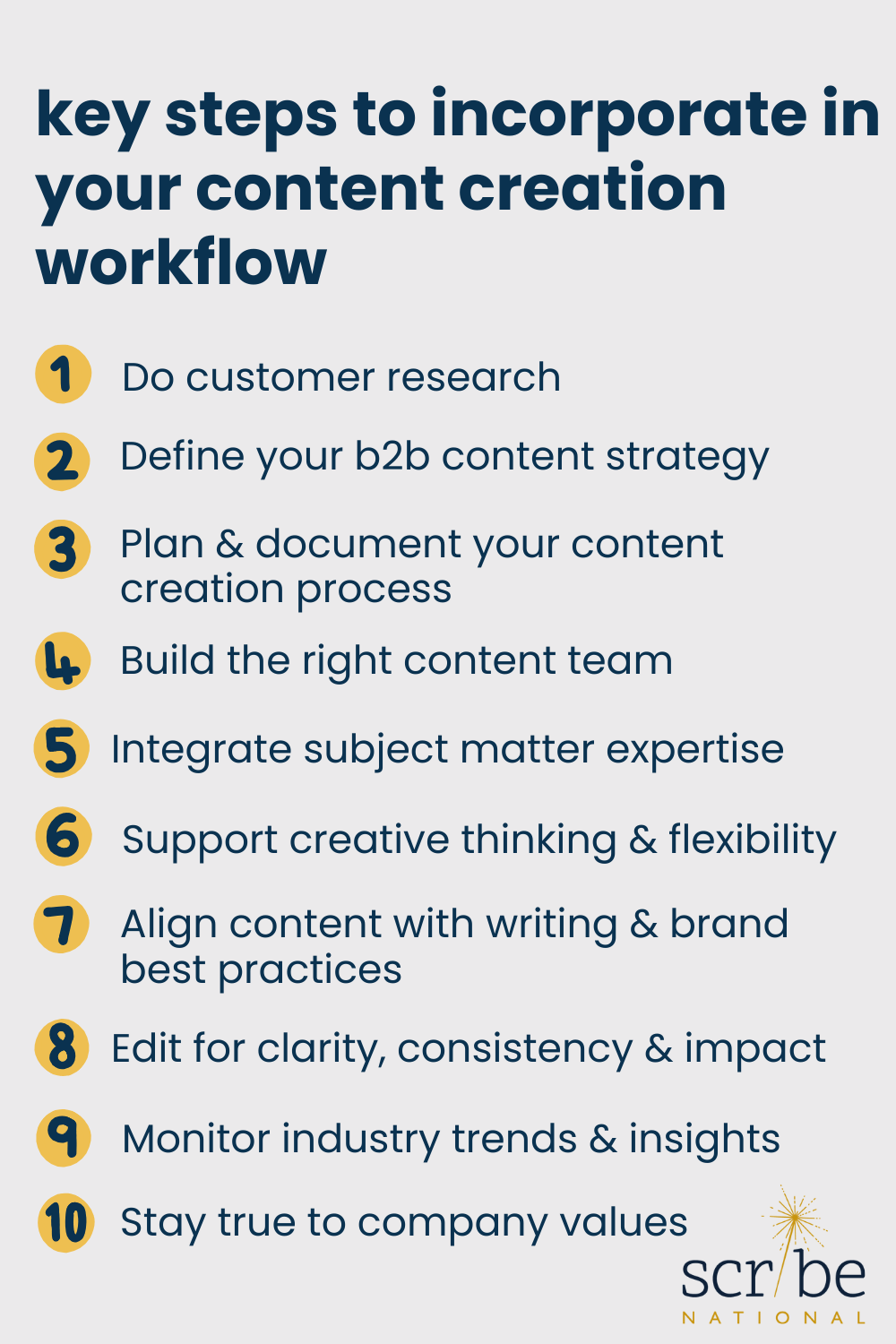
Not every workflow looks the same, but high-performing B2B teams tend to follow a similar structure. The steps below cover the core elements that help content teams work efficiently and produce content that drives your desired results.
1. Do customer research
Customer research is the foundation of an effective content creation workflow. This step helps you understand your buyers’ challenges, priorities, language and decision-making process. When you build content around this information, your messaging becomes more relevant and useful.
Customer research should be ongoing, not a one-time task. Markets change and needs evolve, so your content should reflect that.
Customer research can include:
Interviews
Surveys
Sales conversations
Support tickets
Analytics
2. Define your B2B content strategy
Think of your content marketing strategy as a map. It should clearly point your content toward specific goals. This helps ensure every piece of content has a purpose.
To define your strategy, consider the following:
Choose your channels and formats: Decide where your content will live and how it will show up, such as blogs, reports, email or social media. Focus on the channels your audience uses and trusts.
Clarify who you’re trying to reach: Define your target audience and the problems they’re trying to solve. This ensures you’re answering real questions and challenges.
Assess the competitive landscape: Look at how competitors are approaching similar topics and identify potential gaps. This helps you create content that offers a distinct point of view.
Perform SEO research: Use keyword research to identify topics your audience is searching for and opportunities to compete in search results. Keyword-focused content supports visibility and long-term performance.
Plan topics and timing: Develop topic ideas and map them into a realistic quarterly content calendar. Content planning helps you balance consistency with flexibility as priorities change.
3. Plan and document your content creation process
Planning how content will get created lets you outline practical details and keep projects on track.
This process should clarify:
Roles and responsibilities: Who’s responsible for each part of the work, from writing and editing to approvals and publishing
Timelines and deadlines: When each stage of the process happens and how long it should take
Review and approval steps: How content is reviewed, who provides feedback and when final approval happens
Distribution and promotion plans: Where content will be published and how it’ll be shared across channels like email, social or sales tools
Measurement and reporting: Which metrics you’re looking at and how performance will be tracked

4. Build the right content team
The quality of your content depends on the people creating it, which is why about half of B2B organizations outsource at least one content marketing activity. Whether you work with in-house staff, freelancers or an agency, the right mix of skills is key for successful content.
Experienced writers and copywriters can help you execute your strategy more efficiently and with stronger results, which is what we help B2B companies with at Scribe National. Designers, editors and marketers also play important roles in refining content and helping it reach the right audience.
Building a reliable team reduces onboarding time and creates consistency across projects. Over time, this leads to better workflows and better content.
5. Integrate subject matter expertise
Subject matter expertise helps your content stand out in crowded B2B spaces. It adds depth, accuracy and context that generic content doesn’t. This is especially important as search engines like Google continue to prioritize helpful content that shares first-hand experience and in-depth knowledge.
Including SMEs in your content creation workflow allows writers to move beyond surface-level explanations. Expert input helps clarify complex ideas, strengthen credibility and support original perspectives that build trust with your audience.
Your SMEs might come from within your company, trusted voices in your industry and sources through platforms like Qwoted. Getting insights usually involves a short interview or asking a source to review your content for accuracy and share additional context.
6. Support creative thinking and flexibility
A strong workflow should support creativity, not limit it. Encouraging curiosity helps teams avoid burnout and produce more engaging content.
Give your team space to explore ideas, draw inspiration from other industries and test new formats when creating content. At the same time, keep your content marketing strategy flexible enough to adapt when timely topics or strong ideas emerge.
Balance structure with freedom. This approach helps your workflow stay effective without becoming overly rigid.
7. Align content with writing and brand best practices
Quality standards keep your content consistent and recognizable. This step ensures every piece aligns with your brand messaging, voice and tone.
Even when working with experienced writers, it’s important to define expectations. Clear guidance helps creators understand how to communicate your ideas and values.
Strong content should educate and support your audience while clearly expressing key messages. Alignment at this stage prevents confusion and reduces revisions later.
8. Edit for clarity, consistency and impact
Editing is a critical step in the content creation process. It improves flow, strengthens messaging and catches errors that could undermine credibility.
An editorial style guide helps maintain consistency across all content. It should cover voice, tone, formatting and basic grammar rules. Editors can then review content against a shared standard.
Clear, well-edited content is easier to read and more likely to earn your audience's trust. It can also encourage readers to share your content.
9. Monitor industry trends and insights
Staying informed helps your content remain relevant. Monitoring trends, research and thought leadership allows you to adapt your strategy and identify new opportunities.
This doesn’t mean chasing every trend. Instead, focus on insights that align with your audience and business goals. Consider how changes in your industry affect topics, budgets and execution.
10. Stay true to company values
Your content should reflect what your company stands for. Values guide how you communicate, what you prioritize and how you build trust with your audience.
In uncertain economic or political climates, values-driven content helps establish credibility and long-term relationships. Buyers are more likely to support brands that align with their beliefs.
Consistency here builds emotional connection and reinforces your brand over time.

One step you should always incorporate into your content creation workflow
The one step you should always incorporate into your content creation workflow is customer research. This anchors every other step in your workflow, guiding your strategy, messaging, topic selection and content.
When research is missing or outdated, you’re creating content based on assumptions rather than facts about what your audience actually needs. This often leads to missed opportunities to connect, build trust and move buyers forward.
This step doesn’t have to be complex, either. Review sales conversations, have customer interviews, look at support tickets and track performance data to understand your audience’s priorities, language, objections and decision-making process.
Get support with your content creation workflow
An effective content creation workflow balances strategy, structure and flexibility. When these key steps work together, content is easier to produce and more likely to help you meet your goals.
If you’re ready to refine your content creation process or want support executing it, Scribe National can help. From strategy to done-for-you content, we work with B2B teams to create content with purpose and measurable results.
Book a free discovery call to inquire about working together.