

Looking at B2B case study examples is one of the easiest ways to learn what works before you create your own. A B2B case study tells the story of how one business helped another. It walks through the client's challenge, the solution and the outcome. The best examples back up that story with specific results.
According to the Content Marketing Institute, 53% of B2B marketers say case studies deliver some of their best results. At Scribe National, we've seen this firsthand. We write case studies for B2B and fintech brands, including our own.
One case study we wrote for TouchBistro earned 26,440 organic visits in six months. Case studies we wrote for Ashton Construction Services helped them close several deals.
Below, we’ll share five effective B2B case studies and why each one works. We'll also cover popular formats, a six-step writing process and answers to common questions.
5 best B2B case study examples
The examples below come from fintech brands and B2B service companies. We wrote three for clients and two showcasing our own work. Each one tells a customer's story differently, so you can borrow ideas that fit your brand.
1. Business banking case study: Relay
Relay is a business banking and money management platform for small businesses. We wrote this Relay case study about Joseph Studios, a marketing agency with over $1 million in revenue. It shows how the agency used Relay to get its cash flow under control.
What makes it work:
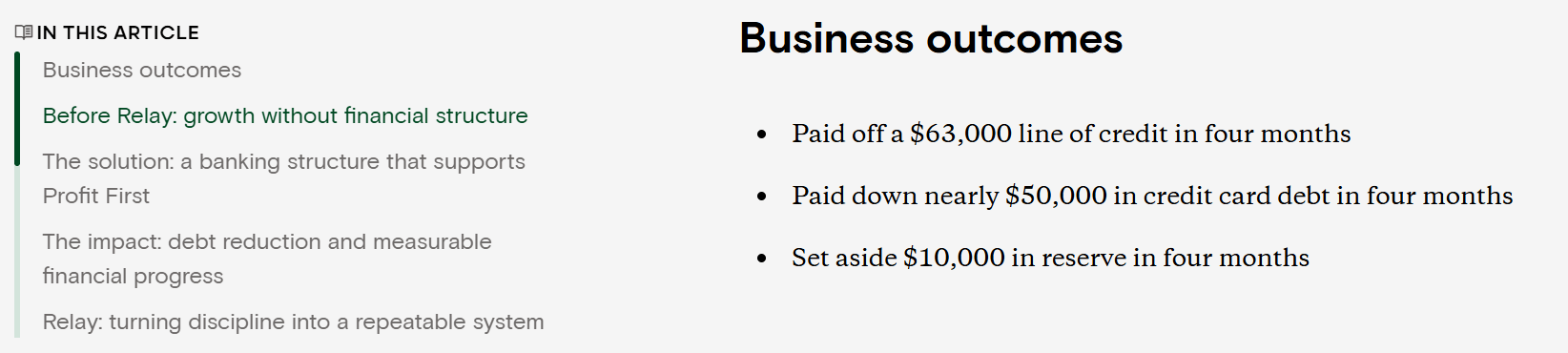
Results come first: A list of business outcomes is near the top of the page. Readers learn the agency paid off a $63,000 line of credit in four months before they read the full story.
Exact dollar amounts build credibility: Many fintech buyers want to see clear numbers before they commit. This case study shares specific figures, making the results more convincing.
The structure is easy to skim: A table of contents and bullet lists help readers find key points fast. Also, headings follow a clear path from the challenge to the solution and impact.
2. Financial operations case study: Float
Float is a financial operations platform built for Canadian companies. It offers corporate cards, bill pay and expense management to more than 7,000 customers. Our Float case study shows how we helped the company expand its organic search presence.
What makes it work:
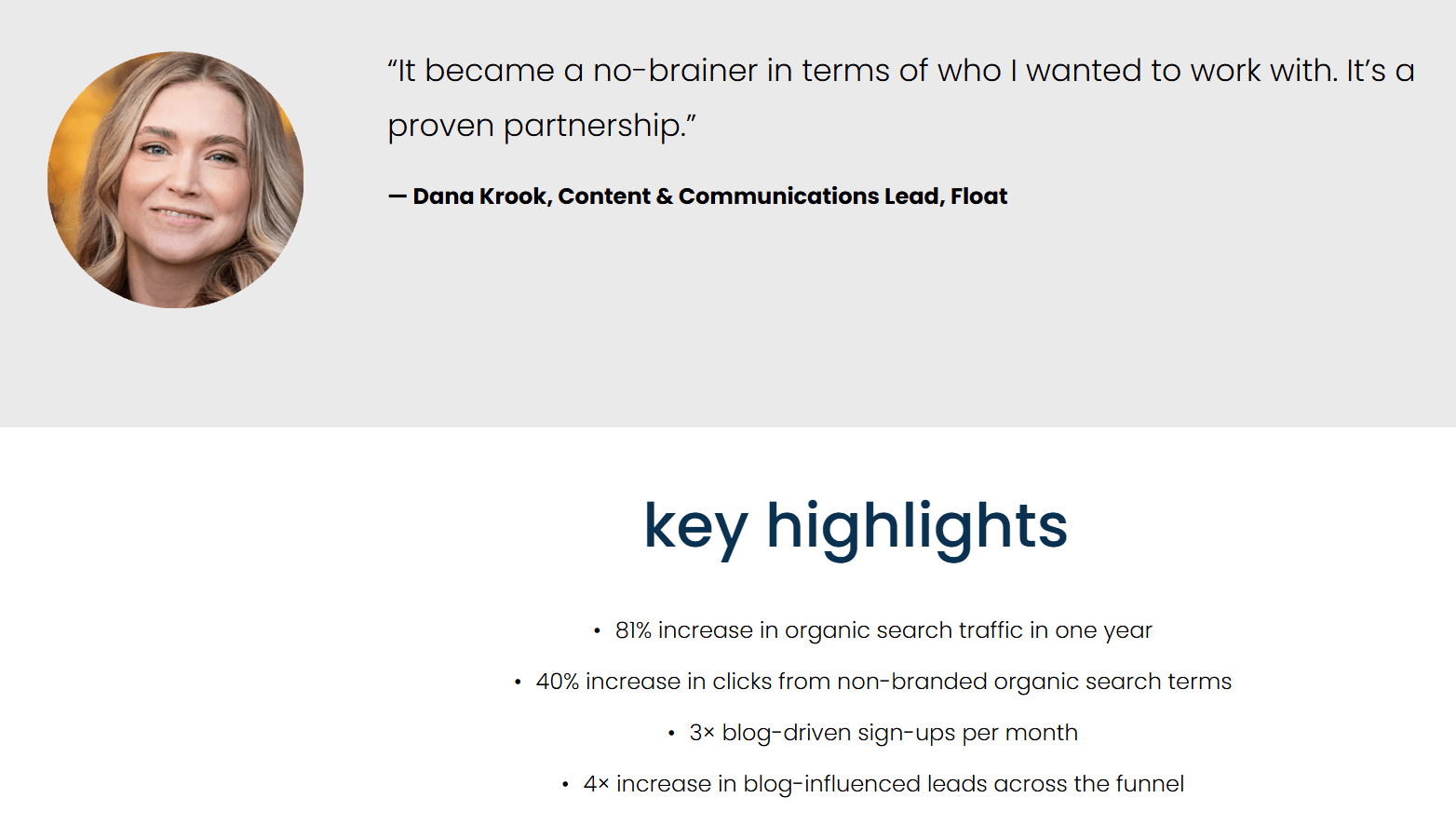
The headline leads with the result: "Float triples monthly product sign-ups from high-intent blog content" tells readers the outcome right away.
The setup is clear: It introduces Dana Krook, Float's Content and Communications Lead, and her goal of growing organic search. Readers in similar roles can relate to her story.
Client quotes add credibility: The client's quotes appear throughout the case study. Her results and experience in her own words help build trust with potential clients.
3. Payments case study: DCPayments
Digital Commerce Payments (DCPayments) was the first company in Canada to offer a non-bank ATM. Our DCPayments case study explains how articles, newsletters and social posts helped the company get 25,000 blog visits and 182 leads.
What makes it work:
Two numbers in the headline: Visits and leads show both reach and business impact at a glance.
It tackles a common fintech problem: DCPayments' technology powers transactions customers never see. When fintech case studies explain hidden value like this, buyers can better understand what a product does for them.
The quote speaks to busy buyers: President Pamela Draper says Scribe National takes work off her plate. Time-strapped leaders reading the case study can easily relate.

4. Commercial construction case study: Ashton Construction Services
Ashton Construction Services (ACS) is a commercial construction firm in Alberta's Bow Valley. We wrote this ACS case study about a new employee housing building for Lake Louise Ski Resort. Case studies we wrote for ACS have helped the company close three deals.
What makes it work:
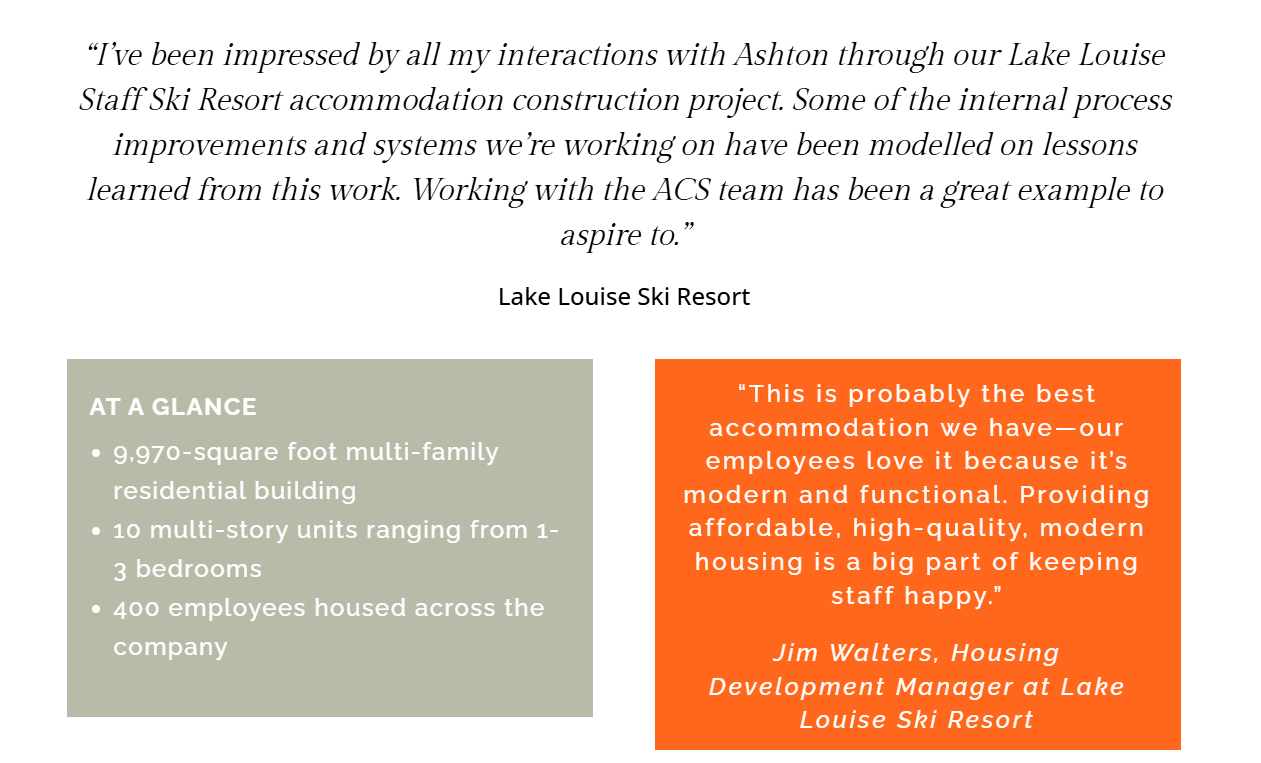
An "At a glance" box sums up the project: Readers instantly see the 9,970-square-foot building, 10 units and 400 employees housed across the resort.
It's honest about challenges: Many B2B case studies skip over problems. This one mentions a supply chain delay and shows how ACS responded, which offers transparency and makes the success story more believable.
The client does most of the talking: Quotes from the resort's housing development manager explain why ACS stood out. A short bio adds credibility to his words.
5. Disaster management case study: RIC Disaster Management
RIC Disaster Management helps communities and businesses prepare for and recover from disasters. In this RIC case study, we showcase how RIC helped the Town of Canmore prepare local businesses for a crisis. Content we wrote for RIC has helped the firm land three multi-year projects.
What makes it work:
Key outcomes appear up front: This lets readers see the impact before diving into the story.
It measures tricky results: Preparedness is hard to quantify. Survey data turns it into clear, credible numbers.
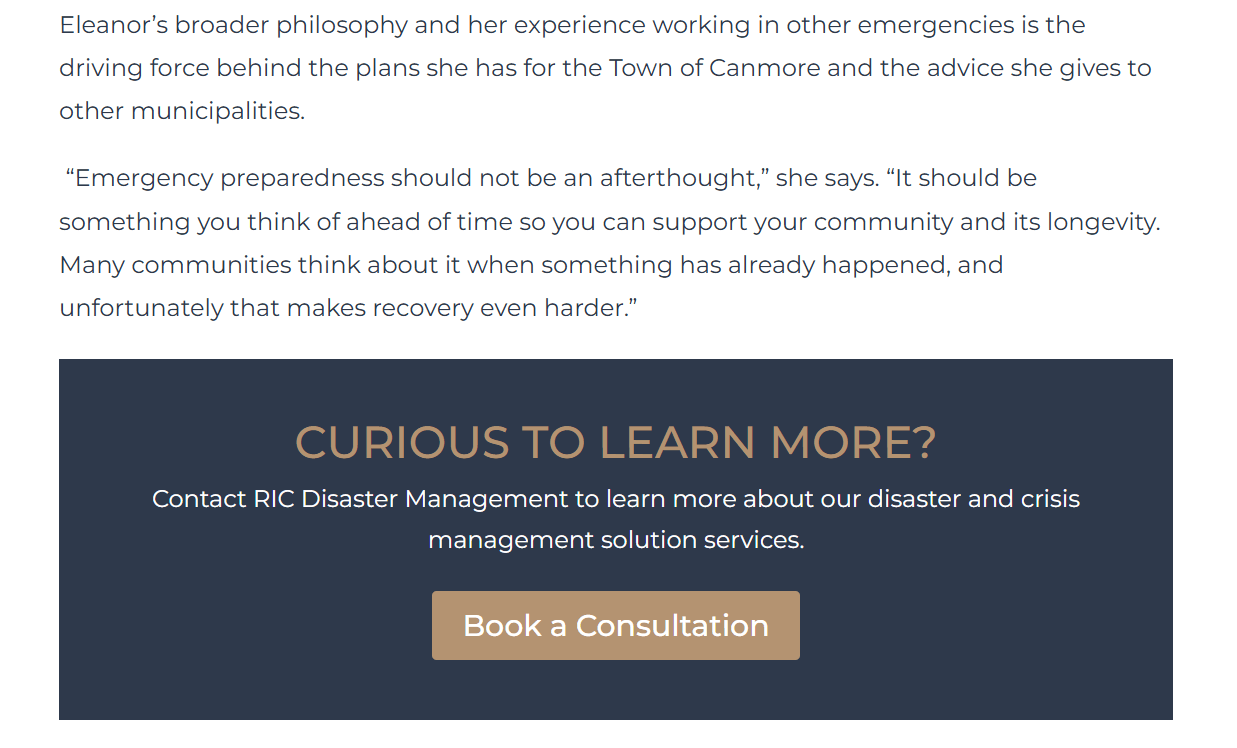
It ends with a clear next step: A "Book a Consultation" button gives interested prospects an easy way to reach out.
B2B case study formats compared
Before you start writing, choose a format that works best for your audience, budget and where you’ll share it.
Written case study: This is the most popular format. It often lives on your website as a web page or blog post. Written case studies can rank in Google and AI search and are also easy to update.
One-page case study: A single page, often a PDF, highlights key results at a glance. It's easy to print or attach to an email. Many brands create a one-pager from a longer written case study.
Video case study: With these, your customer can tell their story on camera in their own words. Hearing directly from a client builds trust quickly. Aim for two to three minutes, then share it on your site, on LinkedIn and in sales emails.
Slide deck case study: A few slides walk through the challenge, solution and results. Sales teams often use these during pitch meetings. They work well when you need a quick, visual summary.
How to write a B2B case study in 6 steps
These steps can help you create a case study that builds trust and inspires action.
Choose your format: Decide how your audience will read or watch the case study, and pick a format that fits your goals. You can always repurpose it into other formats later.
Pick the right client: Look for a happy customer with clear, specific results. Choose one who resembles the buyers you want to attract. For fintech case studies, confirm which financial results the client will share before the interview. This helps make sure you build a story around numbers they’re comfortable with.
Interview your client: Prepare questions about their challenge, why they chose you and what changed for them. You can also ask for concrete numbers. Then, schedule a call to get their responses.
Write the case study: Follow a simple structure for your story: challenge, solution and results. Lead with your strongest result in the headline. Use the client's own words to make the story relatable.
Get client approval: Share the draft with your client and invite feedback. Make any edits before publishing so they feel proud to share it.
Share and promote it: If the case study lives on your website, optimize it for SEO so buyers can find it. Share it on LinkedIn, in newsletters and with your sales team to support lead generation.

B2B case study examples: FAQs
What should a B2B case study include?
A B2B case study should include the client's background, their challenge, your solution and the results. Use specific numbers, like revenue growth or hours saved. Add a client quote and a clear call to action.
How long should a B2B case study be?
Aim for 1,000 to 1,500 words for a written case study. Make it long enough to tell the full story but easy to skim. For video case studies, two to three minutes works well.
Are case studies helpful for fintech brands?
Yes. Fintech buyers want proof a platform is secure and delivers results before they commit. Case studies build trust by showing how your product helped other companies.
How do you get clients to agree to a case study?
Ask happy clients soon after they see results. Explain how and where you’ll share the case study and how it benefits them, like exposure for their brand and a link to their website. Offer to share percentages instead of exact figures if they prefer. Then, let them review the draft before it goes live.
Should you hire a case study writer?
Hiring a writer helps if your team lacks time or interviewing experience. Writers with a journalism background, like myself, are especially skilled at asking the right questions and uncovering compelling details. A writer can also handle scheduling, interviews and revisions for you.
Get help creating B2B case studies that win buyers
Effective B2B case studies tell a clear story and back it up with results. They help prospects picture their own success with your brand.
At Scribe National, we write case studies for B2B and fintech brands who want to build trust, grow organic traffic and generate leads. If you’d like support, we’d love to chat about your goals. Explore our services or book a free consultation.